Reading the Produce Aisle: How Private Chefs Price a Menu Without Dimming the Occasion
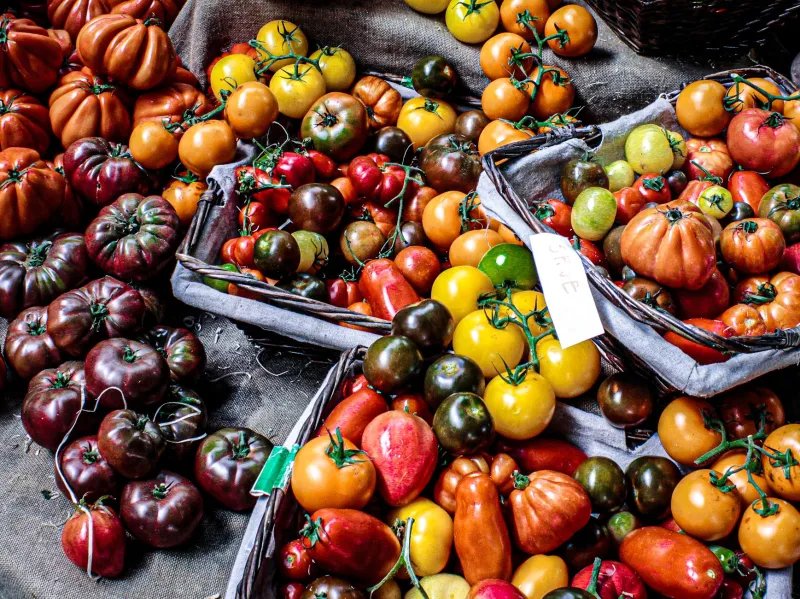
A host opens a menu proposal, scans the per-guest figure, and pauses at the tomato course. The question is rarely about tomatoes alone. It is about value, judgment, and the quiet worry that the evening is being priced beyond what anyone can comfortably defend. Private chefs know this moment well. The best ones do not answer with a spreadsheet. They answer with a story about sourcing, season, and the role that one ingredient is being asked to play.
Start With the Tomato, Not the Spreadsheet
The tomato is a useful teaching tool because almost every American host has a reference point for it. A grocery-store tomato in January and a farmers-market heirloom in August may share a name, but they do not share a cost structure. One is bred for travel, shelf life, and uniform appearance. The other is bred for flavor, picked at ripeness, and handled with care from field to kitchen. When a chef explains that difference, the menu price begins to make sense without anyone feeling scolded.
Chefs often use language that keeps the focus on experience rather than expense. Instead of saying an ingredient is expensive, they might say, 'This is the version of the tomato that tastes like the season.' Instead of calling a lower-cost option basic, they might describe it as 'the supporting player rather than the headline.' The goal is not to disguise cost. It is to make the trade-off visible and dignified.
A useful line for hosts and planners is this: 'I can build the same course at three price points; the tomato will tell us which one you are tasting.' That sentence does two things at once. It acknowledges that cost is real, and it invites a choice rather than a defense.
The Three Questions That Clarify Cost
Private chefs rarely begin with price per pound. They begin with purpose. Three questions tend to organize the conversation.
First, what role does the ingredient play? A tomato that anchors a salad, carries a sauce, or provides the only fresh note on a winter plate is doing different work. The more central the ingredient, the more its quality matters.
Second, how flexible is the season? A chef may recommend peak-season produce for a signature course and a carefully chosen preserved or greenhouse alternative for a supporting element. The key is honesty about what is being gained and what is being sacrificed.
Third, how much labor does it require? A tomato that needs peeling, seeding, slow roasting, or delicate plating carries a different kitchen cost than one that is simply sliced. Ingredient price is only one line in the true cost of a dish.
Chefs often phrase the conclusion gently: 'Let us decide where the tomato is the point and where it is the background.' That single question can redirect an entire planning session from anxiety to architecture.
A Tiered Framework That Keeps the Party Intact
The most effective private chefs present menu options as tiers, not ultimatums. A three-tier structure gives hosts room to choose without feeling cornered.
The Signature tier places money where guests will notice it: a centerpiece tomato course at peak season, a distinctive finishing oil, a cultured dairy element, or a garnish that adds fragrance and texture. This is the tier for the dish that will be remembered.
The Seasonal tier balances quality and practicality. It uses produce at its best available moment, leans on regional sourcing where possible, and accepts that not every component needs to be a headline. A chef might pair a flavorful in-season tomato with a simpler base, letting one ingredient do the elegant work.
The Essential tier is not an apology. It is a disciplined menu built around reliable ingredients, efficient labor, and strong technique. A skilled chef can make a modest tomato taste intentional when it is treated with acid, salt, heat, and timing. The difference is not carelessness; it is allocation.
For events, the wiser approach is often to tier by course rather than by whole menu. Splurge on the opening bite or the main course. Save on the starch, the mixer garnish, or the dessert decoration. Guests remember the peak, not the average.
Where to Splurge and Where to Save
Hosts and event planners often ask for a simple rule. A practical one is this: splurge where flavor is exposed, and save where technique can carry the load. Heirloom produce at its peak, centerpiece proteins, finishing oils, fresh herbs, and a well-chosen cheese course tend to justify their cost because guests taste them directly. Base starches, filler garnishes, out-of-season produce with little flavor advantage, and elaborate passed appetizers that disappear in one bite are often better places to economize.
Chefs also encourage hosts to compare the differential, not just the total. 'The difference is six dollars per guest,' a chef might say, 'and here is exactly what it buys.' That framing turns a vague fear into a concrete decision. It also respects the host's authority.
Planners can help by setting guardrails before the tasting: a target range per guest, a clear guest count, and a short list of non-negotiables. Once those are set, the chef can design within them rather than negotiate after the fact. A menu price should feel like a promise, not a puzzle.
Language That Keeps the Mood
Tone matters as much as math. Chefs avoid words like cheap, expensive, and upgrade when possible. They favor entry, seasonal, signature, simpler, and more generous. They present options side by side rather than in a ladder of judgment. They name the trade-off out loud: 'If we move the tomato to the opening course, we can keep the main course at the same level.'
Above all, they remember that hospitality begins before the first guest arrives. A host should never feel tested by a menu conversation. The chef's job is to make the cost of ingredients legible without making the occasion feel smaller. The tomato test is not a quiz. It is an invitation to choose with confidence.