The Unseen Choreography: How Elite Event Staffing Turns a Gala Into Grace
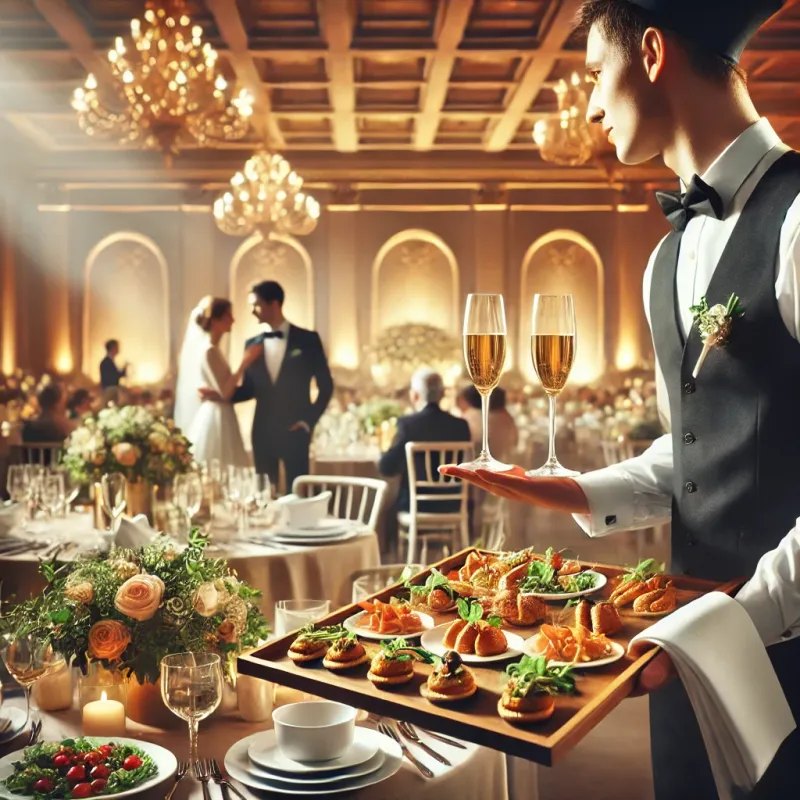
Photo: elegant catered gala event servers carrying trays candlelight ballroom, via www.soho-partyservices.com
The guests arrive to candlelight, a quartet, and a passed canapé that seems to materialize the moment a hand grows empty. Nothing spills. Nothing lags. Nothing draws attention to itself. This invisibility is the product — and producing it requires more coordination than most attendees will ever suspect.
At Chefs Inc., we spend as much time thinking about the people carrying the trays as the food on them. A tasting menu, however brilliant, cannot survive a disorganized floor. To understand what separates a polished evening from a chaotic one, we spoke with staffing veterans who have worked hundreds of events across the country, from museum fundraisers in Chicago to vineyard weddings outside Austin.
The Captain Sets the Tempo
Every well-run event has a conductor, and in catering that role belongs to the captain — sometimes called the lead or maître d'. Long before doors open, the captain has built a timeline mapping cocktail hour to the minute, coordinated course pacing with the kitchen, and assigned stations by name.
"The captain is the metronome," one veteran of Los Angeles galas told us. "If the entrée lands while a keynote is still running, or the bar runs dry during the toast, that's a captain who wasn't reading the room."
That reading happens constantly. A skilled captain watches guests' glasses, the band's set list, and the client's body language, then adjusts — holding the second course by ten minutes, releasing servers in waves rather than all at once. Guests experience this as atmosphere. It is actually arithmetic, executed in real time.
The Cocktail Hour Clock
Ask event professionals which segment is hardest to control and most point to the cocktail hour. It is deliberately loose — mingling, no assigned seats — and yet it is choreographed down to thirty-second intervals.
Passed hors d'oeuvres move on rotation patterns so no guest is skipped twice. Servers stagger their loops to avoid clustering at the bar. A silent countdown governs when the call to dinner goes out, usually signaled to the captain by a planner or the client's assistant rather than announced to the room.
"A timed cocktail hour is a dance everyone pretends is a casual stroll," one New York-based staffing director explained. "You want the last bite passed two minutes before the call to dinner, not ten minutes before, or people are hungry and restless."
What Separates Flawless From Chaotic
The professionals we spoke with converged on a short list of differences:
- Briefing discipline. Strong teams gather for a full pre-shift: menu knowledge, dietary flags, VIP lists, timeline, and who to call when something breaks. Chaotic events usually skipped this.
- Anticipation over reaction. Elite servers refill a water glass before it's empty and clear a plate when the guest sets the fork down — not when asked.
- One chain of command. When a captain, kitchen lead, and planner all give conflicting instructions, service collapses. The best events name a single decision-maker on the floor.
- Quiet communication. Hand signals and discreet headsets replace raised voices. If a guest can hear the coordination, it's already gone wrong.
Vetting a Staffing Agency: A Planner's Checklist
For event planners and hosts, the staffing agency is where quality is won or lost. Veterans offered a consistent set of due-diligence steps:
- Ask about the captain specifically. Who is it, how many events have they led, and will they attend the walkthrough?
- Request the staff-to-guest ratio in writing. For plated dinners, one server per ten to twelve guests is a common baseline; passed cocktail service often demands more.
- Confirm training on the actual menu. Staff who can describe a dish, its allergens, and its wine pairing elevate the experience; staff handed a tray an hour earlier do not.
- Check insurance and worker classification. Reputable agencies carry liability coverage and treat staff as trained professionals, not day labor.
- Insist on a pre-event briefing. If an agency won't commit to a briefing with the kitchen and planner, treat it as a red flag.
The Luxury of Invisibility
The paradox of great event staffing is that its success is measured by how little anyone notices it. Guests remember the filet, the toast, the last dance — not the twenty hands that kept glasses full and courses timed to the minute.
For planners, that's the standard worth hiring for: a team so practiced that the evening feels effortless to everyone except the people running it. Behind the candlelight, after all, there is always a metronome.