Beyond the Pass: The Quiet Career Shift Reshaping Who Cooks at America's Private Tables
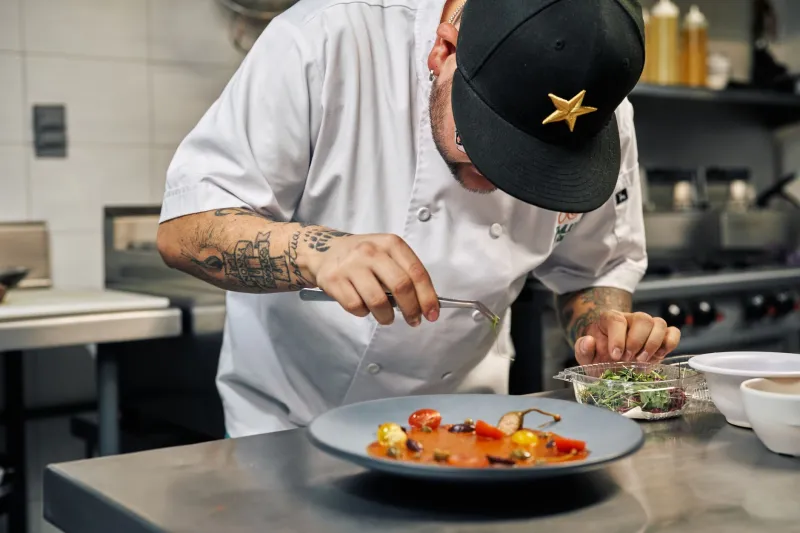
There is a conversation that recurs in the offices of restaurant groups and the group chats of sous chefs, and it rarely makes headlines. It goes something like this: the work is good, the food is good, the team is good—and yet the next chapter looks increasingly like someone else's dining room. The departure of talented cooks from restaurant kitchens toward private chef roles, catered events, and dedicated staffing work is not a sudden exodus. It is a slow reallocation of skill, and 2026 is the year it has become difficult to ignore.
For hosts and event planners, the shift is largely good news: a deeper bench of seasoned professionals is now available for private dinners, milestone celebrations, and corporate programs. For restaurants, it is a retention problem with a long tail. And for the industry as a whole, it raises a useful question—what does high-end cooking look like when the dining room is a client's home, a rented venue, or a boardroom rather than a 60-seat reservations book?
What the Departure Actually Looks Like
This is not a story about cooks leaving the profession. It is a story about cooks leaving a format. The chefs moving into private service tend to share a profile: eight to twenty years in restaurants, a foundation in classical or ingredient-driven cooking, and a resume that includes a tour at a serious establishment. They are not fleeing food. They are fleeing the arithmetic of the restaurant week.
Recruiters and culinary staffing firms describe the same pattern in different markets—New York, Chicago, Austin, Seattle, Charleston, Los Angeles. A chef de cuisine with a decade of experience begins taking occasional private dinner work on Mondays, when the restaurant is closed. The work pays well, the client is appreciative, and the evening ends at a reasonable hour. Within eighteen months, the side work becomes the main work. The restaurant loses a leader it had spent years developing.
The Arithmetic Behind the Decision
Compensation is only part of the story, but it is the part that is most often misrepresented. Private chef work does not automatically pay more than a senior restaurant role. What it offers is a different relationship between hours and income. A restaurant chef's salary is fixed against a schedule that can stretch to seventy hours. A private chef's calendar is smaller, more controllable, and priced per engagement—which means a well-organized operator can earn comparable income with materially fewer service hours.
There are structural reasons for this. Private and event work carries no liquor program, no walk-in traffic, no reservation system, and no nightly rent burden in the same way a restaurant does. The chef is selling labor, judgment, and a menu rather than a seat. That changes the economics of the week, and for many chefs it changes the sustainability of the career.
Creative Authority and the Room That Fits the Menu
Ask chefs who have made the move what they value most, and the answer is rarely money. It is authorship. In a restaurant, a menu is a compromise between the kitchen's ambition, the cost of goods, the pace of the pass, and the expectations of a broad public. In a private kitchen, the menu is a negotiation with a single household—or a single event—and the chef can adjust in real time.
That intimacy cuts both ways. Cooking for twelve guests in a home requires a different kind of discipline than cooking for two hundred covers: improvisation, equipment triage, and a tolerance for working in rooms that were never designed as kitchens. Chefs who thrive in private service tend to be unusually organized and unusually good at reading a room. The best of them treat the client's kitchen with the same respect they would give a professional range.
What Hosts Gain—and What They Should Not Assume
For hosts, the practical benefit is access. A caliber of cooking that once required a reservation and a drive across town is now available at a table you already own. Private chefs increasingly arrive with supplier relationships, dietary fluency, and the ability to design a menu around a specific room, a specific guest list, and a specific hour.
But the influx of restaurant talent should not be mistaken for a guarantee of professionalism. Private service is a separate discipline with its own requirements: food safety certification, liability insurance, permitting, sourcing logistics, and a clear scope of work. Hosts and planners should verify these details rather than assume that a strong restaurant resume translates automatically into a well-run private engagement. The chefs who have built durable private practices are the first to say so.
The Restaurant's Countermove
Restaurants are not passive in this. Across the country, operators are experimenting with four-day service weeks, profit-sharing, and more flexible scheduling to retain senior kitchen talent. Some groups are formalizing external event work as part of a chef's role rather than treating it as a conflict. Others are recruiting from a wider pool and investing more deliberately in the middle of the brigade—the sous chefs and junior leaders who are most likely to be courted by private clients.
None of these measures reverses the trend. They simply make the restaurant a more credible long-term option for chefs who might otherwise drift toward private work by default.
Why It Matters for Event Planners
For planners, the practical consequence is a buyer's market in talent and a more complex vetting process. The pool of available chefs is deeper, but it is also more varied in quality and in operational readiness. The strongest private chefs now present like small businesses: menus, contracts, insurance, staffing plans, and clear communication about what a home or venue kitchen can realistically produce. Planners who ask for those materials early will find the selection process far easier.
The broader effect is a gradual raising of the ceiling for private dining in the United States. As more experienced chefs move into private service, the expectations of hosts rise with them—and the chefs who remain in restaurants are reminded, usefully, that talent has options.
The Outlook for 2026
The migration is unlikely to reverse this year. It may not need to. What is emerging is a more porous boundary between restaurant and private kitchens, with chefs moving between the two over the course of a career rather than choosing one for life. For hosts, that means better access to serious cooking at home. For restaurants, it means retention deserves the same attention as recruitment. And for the industry, it means the pass is no longer the only place where a career is made.